
Cruising from idea to intake
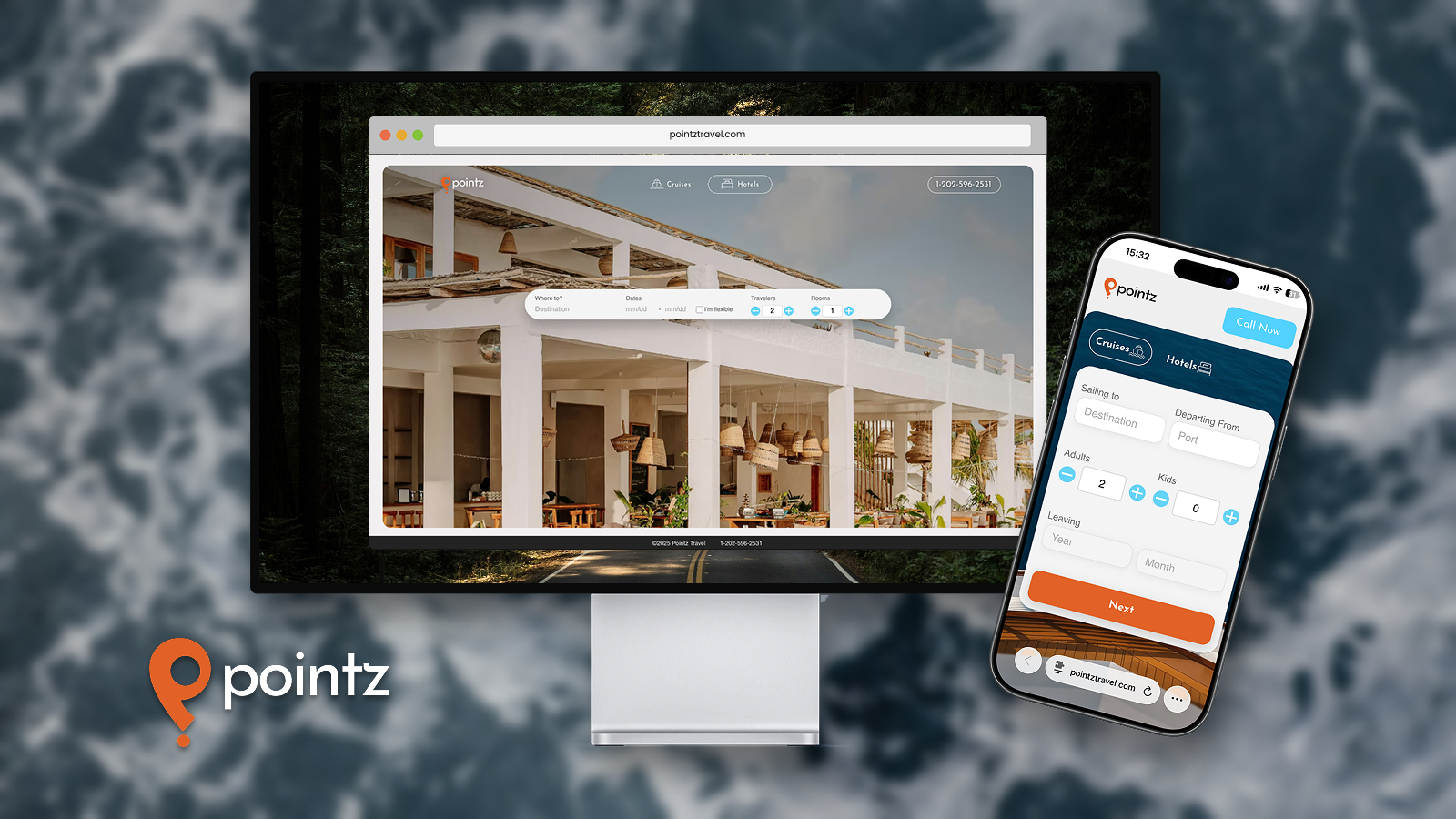
Pointz Travel didn’t need a contact form. It needed intake that turns website traffic into quote-ready leads, without creating admin chaos. A travel site lives or dies on that first step, so we built a clean, guided request flow that keeps things fast on mobile and consistent on the back end.
Adam is a founder and friend of mine, and he brought me in when he was ready to expand his travel agency past the grind that got him this far. Up to that point, growth meant cold calling and a piecemeal setup that wasn’t built to catch inbound interest, so even when someone was curious, there wasn’t a clean path to turn that into a real lead. The project was straightforward: give Pointz Travel an intake system that works like a quiet employee, guiding people through cruises and hotels in a tight, mobile-friendly flow, then handing Adam a complete, structured request he can act on.
The first thing we did was clarify what inbound meant for Adam in practice. Not a generic contact form, and not a long questionnaire that feels like homework. We mapped the exact details he needs to start a quote, the order he naturally asks for them on a call, and the points where people tend to hesitate or drop off. That became the blueprint for two guided intake paths, cruises and hotels, designed to feel quick on the front end while still capturing the information that normally gets scattered across a bunch of back-and-forth messages.
Once we had that blueprint, the next decision was whether to use Wix’s built-in forms or go custom. The baked-in option works for “contact us,” but it doesn’t feel like travel. For Pointz, the form is part of the product, and the experience needed to borrow credibility from patterns people already trust, the compact booking style you see on real travel sites where you pick the basics first, then refine. That’s why we built custom guided request forms. They keep the interaction tight and familiar, guide people through cruises and hotels without dumping a giant form on them, and still capture a complete request in a clean, predictable format on the back end.
Getting the form to look right was the easy part. The real work was making it behave like a pipeline instead of a message box. Every step in the flow had to translate into a structured payload, pass cleanly out of the embed, get handled by page code, and land in the backend in a way that reliably creates or updates a contact and writes the trip details into the right custom fields. That’s the part most people don’t see, and it’s also the part that usually breaks. The end result is that a “Cruises” or “Hotels” submission doesn’t arrive as a blob of text. It arrives as organized data Adam can actually work from every time.
Once our pipeline was stable, the goal shifted from “make this work once” to “make this easy to repeat.” We set it up as a repeatable path from form to page code to backend to contact fields, so adding a new offer later doesn’t mean rebuilding the whole stack. It becomes a clone-and-tweak job: duplicate the flow, swap the questions, map the fields, and publish. Pointz can expand without every new service turning into a fresh technical project.
The end product is simple to describe, even though a lot is happening under the hood. Pointz Travel now has a branded intake experience that feels familiar to users, works cleanly on mobile, and routes cruise and hotel requests into an organized lead record instead of a messy free-text message. Adam gets consistent, usable details the moment someone submits, and the site finally supports inbound the way a growing agency needs it to.